What is Sown as Seed Grows

Homily for 16th Sunday in Ordinary Time (Year A)
July 23, 2017
St. Francis of Assisi, Fisher – 8:00 AM; Holy Trinity, Tabor – 10:00 AM

Focus:               What is sown as seed grows.
Function:         Sow good seed.
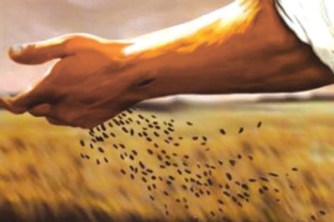

sowing seedSow an act, and you reap a habit.
Sow a habit, and you reap a character.
Sow a character, and you reap a destiny.
-Charles Reade

We reap what we sow.
What is sown as a seed grows.

Last week we heard about the sower who went out to sow. The sower is God, and the seeds are his Word. Our hearts are the fields to receive his Word. We were asked to reflect on the state of our hearts. We were challenged to cultivate our hearts so that they become the rich soil where the seed of God’s word can flourish.

Today, we are reminded that, while it is true that God sows his seed, it is equally true that he is not the only sower. The Evil One also sows his seed.

What is sown as seed grows.

Acts of sin grow into habits of sin.
Habits of sin grow into vices.
Vices, if unchecked and without conversion, can transform the fields of our hearts into fields of weeds which will not yield a bountiful harvest, but can only be bundled up and burned. Vices enslave us in our sins. They prevent us from loving well.

But acts of goodness grow into habits of goodness.
Habits of goodness grow into virtues.
Virtues, if planted and watered and tended, can transform the fields of our hearts into fields of wheat which yield a bountiful harvest, and are gathered into the Lord’s barn at the time of the harvest. Virtues give us the freedom to become saints. They give us the freedom to give fully of ourselves, to love freely.

What is sown as seed grows.
God will reap what we allow to be sown in our hearts.

I think we can look at this parable of the weeds and the wheat in two ways. The Gospel presents the weeds as the children of the Evil One and the wheat as the children of the Kingdom. The field is the world. Each person is a weed or a stalk of wheat. God lets them grow together until the Harvest.

I think we can also look at this parable in another way. We can see each person’s heart as a field that contains both weeds and wheat. The wheat is to be tended and nurtured and we are to stunt the growth of the weeds where we can. The seeds continue to be sown throughout our lives. We want to open ourselves to the seeds that come from God and close ourselves to the seeds that come from the Evil One. The field is each person’s heart. Each person’s heart is a field of wheat and weeds. God allows the person to grow and to cultivate his field until harvest time.

St. Thomas Aquinas once said,
Take away all evil, and much good would go with it.
God’s care is to bring good out of the evils that happen, not to abolish them.

God wants a bountiful harvest. He is willing to tolerate a few weeds for now in order to allow the wheat to grow. But, brothers and sisters, the weeds will be separated later. And that should motivate us to use the time we have now to tend the fields of our hearts.

We must do our part. We must cultivate our fields.

The Book of Sirach urges us:
Delay not your conversion to the Lord, put it not off from day to day. (Sirach 5:8)

What is sown as seed grows.
The Harvest is coming.
God will reap what we allow to be sown and grown in our hearts.

Last week and the week before, I attended the JPII Camp for the middle schoolers of the diocese. I spent hours hearing confessions. I was inspired to see the campers make life changing confessions. They recognized where they had allowed the Evil One to sow the seeds of sin in the fields of their hearts, they saw the weeds springing up, and they experienced conversion. They tended their gardens. They took a huge first step in making a resolution to rid themselves of the actions that sow the seeds of weeds in their hearts and resolved instead to sow the seeds of virtue.

Their hearts are young. It is early in their growing season.

Some of us are not so young. It is later in our growing season.

Yet one thing is certain. The first reading, in speaking of God, tells us that “You gave your children good ground for hope that you would permit repentance for their sins.”

God is patient. God will wait. He does not rush into the field of the world and uproot those of us who are weedy. He waits. He allows us to tend the fields of our own hearts – to change – to open ourselves to receive the seeds of His Word.

During this growing season of your life, do not stand idly by. Tend your field. Open your heart to the seeds of God and close yourselves to the seeds of the Evil One.

What are you allowing to be sown in your heart?

What are you allowing to be sown in your children’s hearts?

Are you planting so as to reap a harvest worthy of Heaven?

Our Hearts are the Fields to Receive God’s Word

Homily for 15th Sunday in Ordinary Time (Year A)
July 15-16, 2017
Sacred Heart, EGF – 5:30 PM
St. Francis of Assisi, Fisher – 8:00 AM; Holy Trinity, Tabor – 10:00 AM

Focus:              Our hearts are the fields to receive God’s Word.
Function:        Cultivate the field of your heart.


gardening

(Click Here to Follow Me)

I have to admit that I’ve never been much of a gardener. Don’t get me wrong, growing up on a farm, I’ve always enjoyed fieldwork. I enjoyed the hours spent driving the tractor as I cultivated the field. I loved the feel of the sun on my back and the wind in my face as I picked up the hay bales with the stackwagon. I reveled in the smell of freshly chopped silage as I rushed out to the field and back to pick up the next load.

But gardening…gardening is much different. Gardening is work. Several weeks back I helped my mom and dad plant their garden. I measured the distance between the rows. Then I hoed the dry and crusty ground, digging the rows by hand as my niece and nephew dropped in the seeds. It was easier for them to keep up with me than it was for me to keep up with them. Finally, I covered the seeds with the dry dirt and used my foot to pack the dirt over the seed.

In the days that followed, we watered and weeded, and we watched and waited. The next time that I was home, I was able to see the growth springing up. The dry, cracked earth had begun to be transformed by the seeds that were planted there. The barren landscape of that garden was transformed by some water and some work. It was made ready to receive the seed that would be planted. Soon, I expect that we will be enjoying the fruits of our labor – tomatoes, corn, onions, and potatoes. 

Our scriptures today remind us that “The seed that falls on good ground will yield a fruitful harvest” (Ps. 65). God’s Word is the seed that is sent forth like the rain from heaven, and it shall not return to him void, but shall do his will, achieving the end for which He sent it.

The seed of God’s Word is sown in the field of our hearts. Our hearts are the fields to receive the seed of his Word.

And like any field, our hearts need to be prepared to receive this seed if the seed is to spring up and bear fruit.

The soil of our hearts must be cultivated with silence so that we can hear the Word of God when it falls during the busyness of our days.

Our hearts must be weeded by the Master Gardener in the confessional; they must be watered with the tears of repentance for our sins so that the seed can grow without being choked off. The roots of vice must be plucked out to make room for the seeds of virtue.

Our hearts must be watered by the rains of prayer which soften them to receive the Word of God so that the seed can break open and bring forth conversion, transformation, new life.

Our hearts must be fertilized with gratitude for the many blessings with which the Lord enriches our lives.

The seed of God’s Word is sown in the field of our hearts. Our hearts are the fields to receive the seed of his Word.

A dry, weary land without water will not bring forth a fruitful harvest, and neither will a hardened heart, closed off to the Word of God, bear the fruit of the Gospel.

Brothers and sisters, you can come to Mass every Sunday and hear the Word of God proclaimed in the Scriptures but
if your heart is not open to receive it,
if you do not meditate on it and reflect on it,
if you do not think about it, pray about it, or put it into practice,
if you do not allow the Word to take root in your heart,
it will not bear fruit.
You will have eyes but you will not see. You will have ears but you will not hear.

But a softened heart,
a heart that has been prepared,
a heart that has been cultivated, watered, and fertilized,
a heart that is receptive to the Word of God proclaimed here every Sunday,
will bear abundant fruit.

The heart that is prepared, ready and waiting to receive the living Word of God, will receive it when it comes.

The seed of God’s Word will take root in that heart,
where it will be cracked open and the life it contains will burst forth,
transforming the landscape of that heart from a dry land into a fruitful field,
bearing 30, or 60, or 100 fold.

What is the state of your heart?

What work needs to be done in your heart so that it can better receive the seed of God’s Word?

One thing is certain. God’s word is poured out. The seed of God’s word will be sown.

Just as from the heavens the rain and snow come down
and do not return there
till they have watered the earth,
making it fertile and fruitful…
so shall my word be that goes forth from my mouth;
my word shall not return to me void,
but shall do my will,
achieving the end for which I sent it.

God’s Word will not return to him empty. It will bear fruit. The question is, will it bear fruit in your heart? Will your heart be the rich soil on which it falls, or will it be dirt of the path, the rocky ground, or the thorny ground?

This is not an easy task. Gardening is hard work. It requires humility. It takes patience, it takes persistence, and it takes perseverance.

It is easy to be open to the Word that we agree with. It is much more difficult to be open to the Word that challenges us. But the fruit is worth the effort. The sufferings of the present are as nothing compared to the glory to be revealed in us (Romans 8:18). If we prepare our hearts to be worthy fields of the seed of God’s Word that is entrusted to us, then we will glory in the harvest of our lives when we stand before God on judgement day.

Soon, the seed of the living Word of God Himself will appear on this altar.

The sower is about to cast his seed from this altar.
This is the seed that gives life to all who believe.
The Eucharist is the seed that has the power to transform your heart because it is none other than the living Word of God, Jesus Christ himself, the Word made Flesh who dwells among us in the gift of his Body and Blood.

Our hearts are the fields upon which this Seed is sown.

May they be hearts of rich soil so as to yield a harvest worthy of Heaven.


Meekness is not Weakness; It is Gentle Strength

Homily for 14th Sunday in Ordinary Time (Year A)
July 8-9, 2017
Sacred Heart, EGF – 5:30 PM
St. Francis of Assisi, Fisher – 8:00 AM; Holy Trinity, Tabor – 10:00 AM

Focus:                Meekness is not weakness; it is gentle strength.
Function:         Place yourself under the yoke of Christ.


IMG_1781

There is a beautiful image near the entrance of one of the chapels at Saint Meinrad, where I attended seminary. You have to go out of your way to find it; it’s not in a conspicuous place. It’s in the basement, near the door to the oratory – a chapel that rarely gets used.

The image depicts the Holy Family on a journey. The Holy Family had fled to Egypt when Joseph learned in a dream that King Herod was searching for the child to kill him. They remained there until Herod’s death, and then came to Nazareth. The image depicts the holy family returning from Egypt to Nazareth.

Mary is seated on a donkey, holding the child Jesus who is two or three years old. Joseph is leading the donkey. In one hand, he holds his walking staff. In the other, he holds the hand of Jesus. Or, rather, Jesus is holding onto Saint Joseph’s finger as he stares at him in admiration.

The title of the painting reads: “The Hand of the Humble Joseph Guides That of the Almighty.”

Another one of my favorite images at Saint Meinrad is located in the seminary chapel. You don’t have to go so far out of your way to find this one. But it’s still not in a conspicuous place. You must look for it. It’s in the back of the chapel, in a corner, near the confessional.

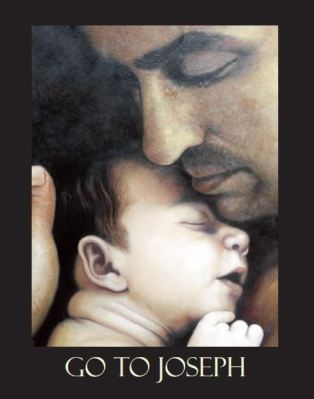
GoToJoseph

This image depicts a close-up of a young father in his early twenties. He has black eyebrows and a five o’clock shadow. His eyes are closed as he cradles his infant son against his bare chest. His son is sleeping, resting his face and bare chest against that of his father. The image contrasts the strength of the father with the weakness of the child. The child is completely dependent on his father, and the father is committed to protecting his son.

The caption under this image reads: “Go to Joseph”

Framed on the wall next to this image of Saint Joseph holding baby Jesus is a Seminarian’s Prayer to Saint Joseph. It reads:

We honor you, Saint Joseph,
for the tender care and fatherly wisdom
that marked your holy life
as you taught your son Jesus
how to be a man. 

Look on us now, we pray,
as we seek to become men
in the very image of your son.
As you guided him to become fully one like us,
so guide us to become more and more like him,
who is our brother and our Lord,
now and forever. Amen.

These images of Saint Joseph are important because they present an image of true meekness. And we need an image of true meekness because we are often presented with an image of false meekness. Too often, we think of meekness as weakness. We think of cowardice, wimpiness, an unwillingness to rock the boat or take a stand for what matters.

But true meekness is not weakness. It is gentle strength. It is self-possession in the face of trial and adversity. It is knowing who you are and having the ability to stay true to who you are when your patience is tried. It is possessing great strength but it is also possessing the ability to harness, to control, that great strength.

Saint Joseph is a model of true meekness. He never speaks a word in the Scriptures. He doesn’t have to. He is a man of great strength. He is a carpenter. He works with his hands. He provides for the needs of his family. He protects his family. Under his watch, no harm will come to them.

But like the location of his images in the seminary, Saint Joseph is not conspicuous. He doesn’t flaunt his strength for all to see. He doesn’t need to. Anyone who looks at him can see that he is a man of strength. Anyone who looks at him can see a man who knows what his mission is and a man who has the strength to carry it out. St. Joseph’s masculine strength shines ever brighter in the light of his humility and meekness. He is a man in possession of his strength, a man who is not ruled by his strength but rather a man who has mastery over his strength.

Meekness is not weakness; it is gentle strength.

Come to me, all you who labor and are burdened, and I will give you rest. Take my yoke upon you and learn from me, for I am meek and humble of heart.

Brothers and sisters, let us take up the yoke of true meekness by following in the footsteps of our Lord who learned meekness in his humanity from the example of his foster father Saint Joseph.

Place yourself under the yoke of Christ who is meek and humble of heart.

Submission to Christ the Lord does not mean being a wimp, a coward, or a pushover. It means knowing what, or rather who, your life is about. It is knowing who you are, or perhaps who you are not, in relation to Christ who is God. It means knowing that God is God and I am not. Placing yourself under the yoke of Christ means believing that his vision for how to live our lives is what will bring us ultimate happiness, freedom, rest, and joy.

Brothers and sisters, if you are not under the yoke of Christ, whose yoke are you under?

I invite you today to cast off the yoke that has you enslaved and take up the yoke of Christ.

Cast off the yoke of vice and take up the yoke of virtue.

Cast off the yoke of slavery and take up the yoke of true freedom.

Cast off the yoke of self-doubt, of self-loathing, of self-deprecation and take up the yoke of your true identity as a son or daughter who is infinitely loved by the Father.

Cast off the yoke of individualism and caring solely for your own needs and take up the yoke of your true identity as a brother or sister to those around you.

Cast off the yoke of arrogance and pride and take up the yoke of humility and meekness.

Cast off the yoke of the world and take up the yoke of Christ:
Christ, the one who came not to be served but to serve;
Christ, the one who set us free from the yoke of sin and death;
Christ, not the harsh taskmaster but the one who is meek and humble of heart.

Take his yoke upon you and learn from him, and he will give you rest. He will give you peace. He will give you joy.

For his yoke is easy, and his burden light.


We Show Hospitality to God When We Show Hospitality to Others

Homily – 13th Sunday in Ordinary Time (Year A)
July 1-2, 2017
Sacred Heart, EGF – 5:30 PM, 8:00 AM, 10:00 AM

First Weekend Homily as a Priest.
First Homily at Sacred Heart in East Grand Forks.

Focus:              We show hospitality to God when we show hospitality to others.
Function:        See God in others and show them hospitality.


Whoever receives you receives me, and whoever receives me receives the one who sent me.

Last weekend I was in Oklahoma City for the ordination of a classmate. After the ordination, I had the opportunity to meet up with a friend that I had not seen in a long time. My friend wanted to take his mom, his brother, and me on a boat ride through the canal that cuts through Oklahoma City. We stood in line to buy our tickets. I was wearing my collar, and I was chatting with my friend’s mother when I noticed a man in front of us ask my friend if there were four in our group. My friend said, “Yes,” and the man turned back to the ticket window. My friend’s mom hadn’t noticed the interaction, so I said to her, “I think the man in front of us is going to buy our tickets.” Sure enough, I then overheard him tell the man working in the ticket booth, “I’ll buy four additional tickets for the group behind me.” The man tried to slip away without being noticed, but I was able to step up and thank him for his generosity, for his great hospitality.

The word “hospitality” comes from the Greek word philoxenia, which means “love of strangers.” To extend hospitality to someone means to welcome guests or strangers. To extend hospitality is to receive someone who is an outsider and to change them from a stranger into a guest. The man who bought our tickets did not know I was a visitor to the city, but I was certainly a stranger, and he showed great hospitality by his generosity.

All four of us were strangers to him, and yet he saw something. I know that he saw me wearing my collar, and so when he looked at me he saw Christ, and he saw an opportunity to show hospitality to God by showing hospitality to me and to my friends.

Whoever receives you receives me, and whoever receives me receives the one who sent me.

In his rule of life for his monks, Saint Benedict challenges his brothers to welcome all guests as if they were Christ. He does so because he knows that we show hospitality to God when we show hospitality to others. I was a stranger and you welcomed me…Whatever you did for the least of my brothers, you did for me. (MT 25). Christ is hidden in the brother or sister standing right in front of us. We are all made in the image and likeness of God, and when we are reborn in the waters of baptism, we become sons and daughters of our Father in Heaven, and we become brothers and sisters to each other.

The Letter to the Hebrews urges us with these words: Do not neglect hospitality, for through it some have unknowingly entertained angels (Hebrews 13:2). Indeed, the Old Testament contains several stories of angels appearing to people as guests on a journey. In receiving the strangers in their midst, these characters in the Old Testament received God.

In the first reading, we hear the story of a woman showing hospitality to Elisha the prophet because she knows he is a holy man of God. She does not show hospitality just because it is a nice thing to do. No, she shows hospitality because she recognizes who Elisha is – she recognizes his identity as a prophet. So, she gives of herself to make him feel welcome. In Biblical times, most people slept on the floor. They did not sit in chairs. Yet, this woman not only gives Elisha a room in her home, but she furnishes the room with a bed, table, chair, and lamp. She gives of herself at great cost to make Elisha feel comfortable in her home. She shows him great respect. She makes him feel welcome in her home. She receives someone who is a stranger and turns him into a guest.

She shows hospitality to God by showing hospitality to another. And I say to you that she surely did not lose her reward.

Brothers and sisters, the Lord is inviting us today through the Scriptures to remember who we are: sons and daughters of a Father who loves us, children of light who are on the way to our true home in Heaven. And in the light of that great truth, he reminds us to develop a heart that sees this truth.

He reminds us to develop a heart of hospitality.

Hospitality is what makes the difference between a house and a home. And so, I ask you: Is your heart a house or is it a home?

Is your heart a home where others find welcome or is it a haunted house that scares them away?

Is your heart a home where others feel like family or a house where they feel like unwanted intruders merely to be tolerated for a time until they leave and I can finally get back to my life?

Do you see others as your brothers and sisters in Christ, made in the image and likeness of a God who loves them dearly, so dearly that he gave his only Son as the price of their redemption – a God who waits for the day when his children will complete their pilgrimage of life and finally come to his home in Heaven?

Is your heart a heart of repentance? Have you experienced his hospitality in the confessional where he waits to welcome you back so that you can extend him true hospitality when you welcome him into your heart in the Eucharist?

Is your heart furnished with the lamp of love and the bed of silence and prayer so that the Lord can come and rest within you?

Brothers and sisters, behold the truth of who we are. We are adopted children of the Father thru our baptism – children of light journeying to our true home in heaven. Our Lord Jesus Christ has gone before us to prepare a place for us in His Father’s house – a house with many dwelling places.

Can we not prepare a place for him here in our hearts?

The man who bought our tickets saw God in us. That was the reason why he bought the tickets. He showed hospitality to God by showing hospitality to us, and we experienced the hospitality of God through his kindness.

We are made in the image and likeness of God, and that means that we show hospitality to God when we show hospitality to each other. Whoever receives you receives me, and whoever receives me receives the one who sent me. We show hospitality to God who dwells in us when we show hospitality to each other.

Let us help each other along the way.  Let us furnish not only our homes with desks, beds, and lamps but also our hearts with love, compassion and generosity.  Let us open the homes of our hearts to each other.  Let us receive one another, and in receiving one another, let us receive Christ. Let us receive him in one another with the same reverence with which we receive him in this Eucharist.

I say to you, if we do this, we will surely not lose our reward.

Christ Came to Set the World on Fire

Homily for 20th Sunday in Ordinary Time (Year C) (75th anniv of death of Maximilian Kolbe)
August 14, 2016
St. Joseph’s, RLF – 10:00 AM

Focus:              Christ came to set the world on fire.
Function:        Go, set the world on fire!


kolbeI have come to set the earth on fire, and how I wish it were already blazing!

75 years ago, in late July of 1941, a prisoner escaped from a bunker in the concentration camp at Auschwitz. He had nothing to lose.  The conditions were horrendous.  He knew he was going to die.

The guards had a rule. If anyone escaped, 10 men would be killed in his place.  So, the guards lined up all 600 prisoners.  The prisoners stood in the hot sun all day while the guards searched for the escapee.

They didn’t find him.

The commander walked up and down the line of prisoners and slowly began to select 10…10 men who would be sent to a starvation bunker with no food, no water, where they would die a horrible death.

 “You.”  “You.”  “You…”

The heart of Franciszek Gajowniczek (Francis Guy oh KNEE check) pounded as the commander approached.

“You.”  “You.”  “You.”

As the commander drew nearer, he looked at Francis, pointed, and said it: “You.”

Francis wasn’t able to control himself. “Please!  My wife!  My children!  Who will care for them?!”

Then another prisoner stepped out of line. He walked up to the commander.

“What do you want?!”

“I want to take that man’s place.”

“Who are you?”

“I am a Catholic priest from Poland, and I want to take his place, because he has a wife and children.”

The commander paused for a moment and stared the prisoner down. “Fine, switch ‘em out!”

The guards sent Fr. Maximilian Kolbe and the prisoners to the underground starvation bunker, where they remained for two weeks. Fr. Kolbe kept his eyes fixed on Christ and gave the men in the bunker hope and encouragement, helping them to meditate on the Passion of Christ, the very passion in which they were now sharing.  At the end of two weeks, four men were still alive.  The guards needed the starvation bunker for more men, so they injected the men with carbolic acid.

Fr. Maximilian Kolbe died on August 14, 1941 – 75 years ago on this date.

Franciszek Gajowniczek remained in Auschwitz for 3 years before he was transferred to another concentration camp. He was then freed by the Allied forces and, 6 months after the War ended, he was reunited with his wife, although his two sons had been killed in the war.

He died in 1995, at the age of 93. Thirteen years before his death, he was present at the canonization Mass where Saint John Paul II proclaimed Fr. Kolbe as Saint Maximilian Kolbe, a martyr of charity.

In speaking of St. Maximilian Kolbe, Francis said: “I could only thank him with my eyes. I was stunned and could hardly grasp what was going on.  The immensity of it: I, the condemned, am to live and someone else willingly and voluntarily offers his life for me – a stranger…

“He didn’t just die for me but for all of us – to give us a witness of heroic charity.”

Jesus said to his disciples, I have come to set the earth on fire, and how I wish it were already blazing!

Christ had set the fire ablaze in the heart of Maximilian Kolbe, and Kolbe in turn set that fire ablaze in those he came into contact with. Saint Maximilian Kolbe was on fire with the love of God.  The fire of Divine Love consumed him – it blazed within him, and God used that heavenly fire to draw Francis out of the pit of destruction and to draw the other men in the bunker out of the pit of hopelessness and despair.  Even though their time in the starvation bunker would end in death, Kolbe kept them focused on the joy they would soon attain – the joy of eternal life.

And when Kolbe died, his flame did not go out. No, it exploded through Auschwitz as other prisoners learned of his heroic deed.  In a cold place of horror, hate, and despair, where the fire of God’s love seemed to have been extinguished, Kolbe lit the torch of hope.  And beyond Auschwitz, the fire that consumed him comes to us today and lights a fire within us.

A fire that cannot be controlled
A fire that cannot be contained
A fire that captivates the hearts of those who see it

A fire that burns deep within our hearts, consuming them and providing the fuel for a life poured out in service…

A fire that burns through our fears and keeps our eyes fixed on the One who came to set the earth on fire with the love of God.

I have come to set the earth on fire, and how I wish it were already blazing!

Brothers and sisters, the fire has been lit. It has been passed down through the centuries.  Sometimes it blazes and sometimes it seems to lay dormant, smoldering in the coals of indifference and lukewarmness.  But Christ desires it to be blazing.  Is your heart ablaze?  Is your heart raging with the uncontrollable fire of divine love?

Fan the flame, don’t let it go out!

Pokemon Go will not set the fire ablaze…
Facebook will not set the fire ablaze…
Soundbites will not set the fire ablaze…
Donald Trump and Hilary Clinton will not set the fire ablaze…

But…Virtuous friendships and real relationships will set the fire ablaze
Pursuing a life of virtue will set the fire ablaze
Prayer – real, fervent prayer will set the fire ablaze

A life transformed by the living Word of God will set the fire ablaze because “The Lord’s voice flashes flames of fire”

Reading the Lives of the Saints, Saints like Maximilian Kolbe, will set the fire ablaze as we encounter the love of God in the example that they set for us.

A life poured out in service, a life spent using the gifts of the Holy Spirit that we have been given, will set the fire ablaze.

A life of charity, devotion, fervor, and zeal will set the world on fire. Saint Catherine of Siena once said, “Become who you were meant to be, and you will set the world on fire.”

Brothers and sisters, we were made for greatness. We were made to be saints.  We were made to be disciples of the Lord Jesus Christ who came to cast a fire on the earth.

Remember who you are.
Go, set the world on fire!

Faith Transforms Fear into Fear of the Lord

Homily – Tenth Sunday in Ordinary Time (Year C)
June 5, 2016
St. Philip’s, Bemidji – 5:30 PM

Focus:              Faith transforms fear into fear of the Lord.
Function:        Arise from your fears!


Two mothers. Two sons.
Two widows. Two dead sons.

Two women filled with two emotions: grief and fear. Grief at the loss of their only sons; Fear of being alone and forgotten.

The widow at Zarapheth was living on the edge of poverty. Just prior to her son’s death, she was preparing to make a cake which she and her son would share, and then they would die.  They were living during a time of a severe famine and she had no more food.

The widow in the Gospel lost her son in his youth. Unlike the widow at Zarephath, she was accompanied by a large crowd at the passing of her son.  She was surrounded by her community.  Yet, I’m sure she had to wonder: Who will be with me a month from now?

Both of the widows had to ask the question: Will I be alone? Will I be forgotten?  Who will take care of me?

Along with their sons, the widows’ hope also died.

They were afraid.

Two widows.
Two dead sons.

Two sons raised to life.
Two sons given back to their mothers.
Two men of God recognized as prophets.

And fear seized them all.

Fear seized them all because they had never seen anything like this before. And they were in awe.  Wonder and awe at what God had done for these two women.  With their sons restored to them, their hope was restored to them as well.  The darkness of their fear and grief was dispelled and they were left with only awe – wonder and awe at God’s action in their lives.

God’s saving action in their lives transformed their fear into Fear of the Lord.  They went from fear to holy fear – wonder and awe. “What just happened?!” That holy fear that sends goosebumps down your spine and sends a chill through your chest as you realize you are standing in the presence of the Divine – in the presence of God himself!

A year or two ago, my mother went on a Marian pilgrimage to Lourdes, France. Over the years, many pilgrims have experienced healing by bathing in the water at the Lourdes shrine where Mary appeared.  My mom brought back with her several bottles of the Holy Water from the springs at Lourdes.

One day, several months after she had returned from the pilgrimage, she was sitting before the Lord in a time of adoration. As she prayed with the Scripture readings for the day, she looked at the Lord in the monstrance on the altar and prayed, “Lord, let me be your hands and feet this week.”

And then she heard something. It wasn’t an audible sound, but she heard a voice deep within.  “Give a bottle of the Lourdes water to Jeannette.”

Now Jeannette was a neighbor who had recently been diagnosed with cancer.

My mom was afraid. “How is she going to react?  I don’t know Jeannette THAT well.  I’m just supposed to walk up to her and say ‘Here, I know you were recently diagnosed with cancer and I think God wanted me to give this bottle of Holy Water to you?!’.  She’ll think I’m crazy!  She probably doesn’t even know about Lourdes!”

Fear.

Fear discourages us. It paralyzes us.  We can become dead in our fears – dead like the sons of the two widows.  We become unable to move – unable to respond in love to what God calls us to do.  

Yet God does not give us a spirit of fear, but rather a spirit of power and love and self-control. God gives us the gift of the Holy Spirit – his spirit – with its seven gifts.  When you were confirmed, the bishop prayed for the outpouring of the Holy Spirit with these words:

“Send your Holy Spirit upon them to be their helper and guide.

Give them the spirit of (1) wisdom and (2) understanding,
the spirit of (3) right judgement and (4) courage,
the spirit of (5) knowledge and (6) reverence.
Fill them with the spirit of (7) wonder and awe in your presence.

Wonder and awe in your presence. Holy Fear.  Holy Fear in the presence of the Lord.  Fear of the Lord.

So, my mom prayed. “Lord, if you want me to give this bottle of Holy Water to Jeannette, you have to make it as least embarrassing as possible.”

The next day is Sunday. As she and my dad leave the house for Mass, she shoves a bottle of holy water in her purse.  They arrive at the Church.  Jeannette is not there.  My mom breathes a sigh of relief.

Then, just before Mass begins, Jeannette and her husband walk into the Church. They sit right in front of my parents.  My mom’s heart begins to pound.  Fear.

Mass ends, and they leave their pew and walk to the back of the Church. My mom turns to my dad and says, “Go on ahead, I’ll be right there.  I need to give Jeannette something.”

She walks back to Jeannette, opens her purse, and gives her the bottle of Lourdes water. “Jeannette, I went a pilgrimage to Lourdes a few months ago, and I thought you might like to have a bottle of the Lourdes water.”

Jeannette has a look of shock on her face – a look of wonder. “I cannot believe this!”  Her eyes well up with tears.  “I’ve been reading about Lourdes and was just saying that I wish there was some way that I could get a bottle of that Lourdes water.  And now you just opened your purse and gave me one out of the blue!”

Later that week, she received an email from Jeannette’s daughter.  The closing line of the email read: “Thank you for being the hands and feet of Jesus.”

Brothers and sisters, faith transforms fear into fear of the Lord.

Faith allows us to see God’s action in the world.

Faith allows us to trust in Him, despite our fears.  He gives us his Holy Spirit so that we can push through our fears, and when we do, we see his presence clearly and we are filled with a Holy Fear.  We are filled with wonder and awe in the presence of the Lord.

And so, brothers and sisters, I offer to you today the words that Jesus offered to the son of the widow.

“I say to you, Arise!”

Arise from your fear of inadequacy at what you can or cannot do, and stand in awe of what God has done and what God can do through you, if only you respond with your “yes” to what he is asking of you!

Arise from your fear of failure and realize that it was the “failure” of the cross led to the true victory over sin and death!

Arise from your fear of not being accepted or loved and stand in wonder of the truth that you were created in love by a God who is love itself!

Arise!

Arise from your fear of Hell – your fear of being unforgivable or unlovable – your fear of rejection – and stand in wonder and awe of Christ’s mercy, love, and forgiveness poured out in the water and blood that flowed from His [point] pierced side on the cross to wash away your sins – stand in wonder and awe of his blood poured out for you that gives real power to the words uttered by his priests: “I absolve you of your sins…” “Take and eat, this is my body.” “Take and drink, this is my blood.”

Arise from your fear that keeps you from a lifelong commitment and stand in the holy fear of a life poured out in service to another, for it is only in making a gift of ourselves that we truly find ourselves!

Brothers and sisters, Arise!

Arise from your fears…
and stand in the fear of the Lord.

The Lord Gives Himself for You. Give Yourself to Him.

Homily – The Most Holy Body and Blood of Christ (Corpus Christi)
May 28, 2016
St. Charles, Pennington – 4:00 PM.

Focus:              The Lord gives himself for you.
Function:        Give yourself to him.


memorial day

This weekend, we celebrate Memorial Day. Tomorrow, across the country, people will gather in parks and auditoriums to remember and to give thanks for those who have offered their lives in service to our country.

Some gave of themselves to serve and never came home.

Others served and came back with wounds – wounds that have left scars in their bodies, minds, or spirits.

They gave their lives.
We received the freedom we enjoy today.
And so, we give an hour tomorrow to remember their sacrifice.

The time we give tomorrow seems so small and yet it means so much to those who served. By showing up tomorrow, we show that we remember. We express gratitude.

In the first reading, Abram has just returned from a battle. His nephew, Lot was living in Sodom when an enemy attacked. Lot and the people of Sodom, along with all of their goods, were captured by the enemy. Abram learned of this and set out to rescue Lot. He was victorious. Not only did he rescue his nephew from the clutches of the enemy, but he also brought back with Him the spoils of war – the goods that the enemy had captured from Sodom when they captured Lot.

Abram is returning from the battle when the priest Melchizedek meets him. Their caravans are loaded with the spoils of war. Melchizedek blesses God for giving Abram the victory, and he blesses Abram as well.

God gave Abram a great victory.
Abram received Lot and his goods back.
And so, Abram gave God, through the priest, a tenth of everything.

In today’s Gospel, the people are hungry. Jesus desires to satisfy their need. He turns to His disciples: “Give them some food yourselves.”

The disciples give everything they have, but it’s not much.
Jesus receives their meager offering.
Jesus gives his blessing, and thousands are fed.

Today is the feast of “The Most Holy Body and Blood of Christ.” At the last supper, Jesus took bread, said the blessing, broke it, and said, “Take and eat…This is my body which will be given up for you.” Then he took the chalice: “Take and drink…This is my blood – my blood which will be poured out for you for the forgiveness of sins. Do this in memory of me.”

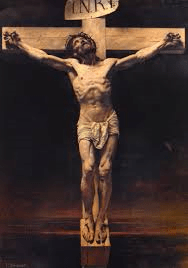
The Crucifixion - Leon Bonnat

The Crucifixion – Leon Bonnat

On Calvary, Christ held nothing back. He holds nothing back. Christ gives Himself – his very self. He gives everything – all that he is. Body. Blood. Soul. Divinity.

At this altar, we stand at the foot of Calvary and receive the gift he gives. And what does he give?

He gives his life for your life,
his death for your death,
his innocence for your sin.

Christ gives Himself for you. He gives everything for you.

Christ gives his Body and Blood.
We receive the pledge of eternal life.

What are you going to give to him?

Will you give yourself to him?

Will you give him your shame and your sins so that he can bath them in the ocean of his mercy?

Will you give him your hurts and your grudges so that you can be free to love generously?

Will you give food to the hungry and drink to the thirsty even as he satisfies your hunger and quenches your thirst in this banquet?

Will you give him your worries and anxieties, your pain and suffering, your sins and failings? Can you give them up to him on the altar of sacrifice as you receive the pledge of your salvation in the simple form of bread and wine, a Body broken and Blood outpoured?

Brothers and sisters, Christ receives what we give to him and he blesses it. He blesses what we offer and multiplies it, making it bear abundant fruit.

He gives Himself for you.

Will you give yourself to Him?

God is Present Even When He Seems to be Absent

Homily – Thursday of the Sixth Week of Easter, Year II – May 5, 2016
First Homily as a Deacon in the STA Chapel – Saint Meinrad Seminary, St. Meinrad, IN.

Focus:              God is present even when He seems to be absent.
Function:        Remember what God has done so as to strengthen your hope in what God is doing.


St. Mary's - Red Lake

A little while and you will no longer see me
And again a little while and you will see me

The poorest area within the Diocese of Crookston is the Red Lake Nation, which is a sovereign nation for the Red Lake Band of Chippewa Indians. Drug use is high.  Literacy levels are low.  Many children are born addicted to heroin or with fetal alcohol syndrome.  The crime rate is high.  The unemployment rate is over 50%.  The average lifespan is 45 years.

In the midst of the Red Lake Nation sits St. Mary’s Mission. The mission includes the parish and a small school.  It is making a difference.  Most of the kids at the school can read at or above their grade level.  Because they find a sense of belonging at the mission – a sense of family – most of the kids will not join a gang in the future.

Fr. Jerry Rogers is the pastor of St. Mary’s Mission. As you can imagine, it is a very difficult assignment.  Resources are scarce.  Most families cannot afford to pay the $425/year tuition.  Fr. Jerry works hard to raise funds so that the mission can continue.

A little while and you will no longer see me.

Last week, someone broke into Fr. Jerry’s office and stole his wallet and the Sunday collection, totaling $530. That must have made him so angry.  He’s working his tail off, he has virtually no resources to work with, and even the small amount that he does have to work with is stolen.  At some point, he had to ask himself – “What’s the use?  Why not give up?”

And again a little while and you will see me.

Then there was a knock at the door. A woman comes in.  “Father, I heard that the collection was stolen, I want to give you something…”  She puts a handful of change on his desk and leaves.  Half an hour later, a man comes in.  “Father, we don’t want you to think that we’re all like this.  It’s not a lot, but we want you to have it”.  He puts a handful of dollar bills and some change on the table.    This goes on for the next two days – people come into Fr. Jerry’s office at different times and give handfuls of change and dollar bills.  $2000.

And again a little while and you will see me.

Fr. Jerry goes to DMV to renew driver’s license, since it was in his wallet. The woman behind the counter says “That’ll be $16.75.”  That’s when Fr. Jerry realizes that he doesn’t have his wallet – it was stolen, after all, and he didn’t bring his checkbook.  How is he going to pay the fee?  Then he remembers that one of the people had given him money while was out of his office, and he had put it in his pocket for the time being.  He empties his pockets on the counter and they add it up.  You guessed it – exactly $16.75 – to the penny.  The DMV employee was moved to tears.

God is the one who makes our work bear fruit. He teaches us to put our trust in Him and not in ourselves.  God is present.  God is present even when it seems He is absent.

He takes a seemingly hopeless situation, and brings great good out of it. He stirs the hearts of people to give generously.  He turns the one stolen Sunday collection into the equivalent of four Sunday collections.  He enkindles faith in the heart of a woman working at a local DMV office.  He brings hope to a humble priest by reminding him that he is not alone in his ministry.

He teaches a baby deacon to depend on him, even when that means scrapping his carefully prepared homily at 7:00 PM and starting over.

A little while and you will no longer see me
And again a little while and you will see me

Brothers and sisters, we are called to depend on him and not on ourselves.

Remember what God has done so as to strengthen your hope in what God is doing.
Remember what God has done so as to strengthen your hope in what God will do.

He will bring good out of evil. He will shine light in the darkness.

He will bring life out of death.

God Wants To Be Your Best Friend

First Homily as a Deacon
Sixth Sunday of Easter, Year C
First Communion Sunday
May 1, 2016
St. Joseph’s, Brooks – 8:00 AM

Focus:          God wants to be your best friend and come to stay with you.
Function:    Be ready for God to come and stay with you.


John Honiotes Deacon OrdinationTwo weeks ago, my friend Stephen and I traveled to Joliet, IL for the diaconate ordination of a good friend. It was a great celebration.  The Church was packed and the reception lasted for hours.  John preached his first homily the next day, and he set the bar pretty high.

I was honored to attend the ordination of my friend, but I was particularly honored that John invited us to stay with him and his family while we were in town. I was honored because, while John is a good friend, I also knew this was going to be a busy weekend for him and his family, and that a lot of people would want to see him.  I did not want him to feel as though he needed to entertain guests during this time, and yet, I looked forward to the time we would be able to spend together.

I was struck by the hospitality of his family. I remember pulling up to their house.  His mom met us at the door, gave us a hug, welcomed us in, and asked if we needed any help with our bags.  Then, she offered us a beer and asked if we were hungry – she had shredded beef in a crockpot for us whenever we got hungry.  The air mattresses were set up in the basement for the three of us.  She enlisted our help in getting a few things ready for the weekend.  It was a joy to be able to stay with John – to talk with him, to pray with him, and to just spend time with him in the ordinary moments of this extraordinary time in his life.

I didn’t feel like a guest in their home. I felt welcomed.  I felt like I belonged.  I felt like I was part of the family.

God wants to be your best friend. He wants to come to come and stay with you.  He wants to come and stay with you at your house.  In fact, you are his house.  You are the dwelling place of God.  Listen again to the words of the Gospel:

Whoever loves me will keep my word.
And my Father will love him.
And we will come to him and make our dwelling with him.

Jesus wants to come and make his dwelling with you. He wants to make his home in you.  He wants to come and spend time with you – to know you – to be in friendship with you.  He wants to be your best friend.

To the four of you who are making your first communion today:

When you have a best friend, you want to spend a lot of time with that person. You want to invite him over to your house – to spend the night at your house.  So, you prepare.  You get things ready.  You do all of your chores without complaining.  You make your bed and pick up your room.  You listen to Mom and Dad.  You are even nice to your brothers and sisters!  You get things ready so that your friend will feel welcomed.

When your friend comes over, you spend a lot of time with him. You talk with him and play with him.  When he spends the night at your house, he sleeps in your room.  And what’s the best part about having your best friend spend the night at your house – in your room?  Going to bed early, right?  No!  You usually stay up late talking to each other, laughing with each other.  You share your toys with him.  You eat your meals with him.  You spend time together and get to know each other better.  You invite him into your daily life, your daily routine – the normal moments of your everyday life.  You invite your friend over to your house, and when he comes to your house often, you become closer friends – almost like brothers.  He is welcomed in your house.  He becomes like a member of the family.

God wants to be your best friend. And today, today is the day.  He comes to stay at your house.  Jesus, who is fully present in the bread we break and the cup we share at this altar, comes into your house and stays with you.  He comes to live with you.  And if you allow him to live within – if you allow him to become your friend, you will be like that holy city coming down out of Heaven – that holy city that “gleamed with the splendor of God”, because God lived within it.

You’ve prepared for this day. You’ve made your room ready for him, and now he is on his way.  He will soon be here, right here on this altar.  Welcome him in when he comes.  Do everything you can to make sure he enjoys his stay.  Treat him with kindness.  Treat his other friends with kindness.  Love him and keep his word, and he will come and make his dwelling with you.  When you come up for Communion and receive him at the door of your lips, welcome him into the room of your heart.  Tell him, “Jesus, come and make your home in my heart.”

Invite him back again next week and the week after that. Carry him with you in your heart during the week and prepare for him to come and stay with you again next Sunday.  When your room gets messy – and it will get messy – when the dirty clothes pile up on the floor of your heart – let him help you clean it up by going to Confession.  So often we feel like we need to make everything look good on the outside, but it’s about the inside.  Get the inside right and the outside will follow.  Have a friendship with Jesus and you will become like Jesus.  Become like Jesus and you will act like Jesus because of your love for him.  The reason why I didn’t feel like a guest at John’s house was because he invited me into what was happening.  We spent time together in the ordinary events of the day, and our friendship deepened.

Celebrate your second, third, and fourth Holy Communion. Invite him to stay with you week after week after week.  Let him become your best friend.

And someday, someday, he will invite you to come and stay with him at his home – in Heaven.

Treasures in Heaven

Reflection for the House of Saint Matthew
Saint Meinrad Seminary & School of Theology
October 6, 2015

treasure1Do not store up for yourselves treasures on earth, where moth and decay destroy, and thieves break in and steal. But store up treasures in heaven, where neither moth nor decay destroys, nor thieves break in and steal. For where your treasure is, there also will your heart be. 
– Matthew 6:19-21

Our treasures reveal our hearts.

We invest our time, our energy, and our money into those things which are valuable to us. We invest our hearts into our treasures. If we want to know what our treasures are, we need only to look to where we are investing our time, our energy, and our money. We look to what our hearts are set on.

Our treasures reveal our hearts. What are our treasures? What are our hearts set on?

Last week I was praying with this Scripture passage during Adoration. I was thinking of my own treasures, and what they reveal about my heart. I was asking what my heart should be set on. What are the treasures that will last? The virtues. My relationships with others. My relationship with the Lord.

The Lord.

I gazed upon the Lord on the altar with this question, and a new question emerged.

Where is the Lord’s heart?

I pondered this for several minutes. Then, the answer came to me. I was staring at the answer.

His heart is on the altar.

His heart is in the monstrance. His heart is alone in the tabernacle in the late hours of the night and the early hours of the morning, waiting for someone to visit. His heart is broken in the bread that is fractured upon the altar. His heart bleeds into the chalice held by the hands of the priest as he utters those words, “This is my Blood”. Why?

Because he is like us in all things but sin. And like us, Jesus invests his heart in his treasure.

He invests his heart in you.

His heart, hidden under the appearance of bread, is now hidden in you who received him at Mass today. His heart, pierced on the cross by the soldier’s lance, bled into the chalice from which you drank.

For where your treasure is, there also will your heart be.

Our treasures reveal our hearts. His heart is hidden in his treasures. And Jesus, as God, stores up treasures that will last. By investing his heart in you, he is storing up treasures in Heaven.