The Eucharist Matters. The Priesthood Matters.

Homily for Holy Thursday – Mass of the Lord’s Supper
April 9, 2020
Sacred Heart, EGF – Thursday, 7:00 PM

[Due to COVID-19, parishioners are unable to join us in person for Mass.  They are watching via livestream in their homes.]
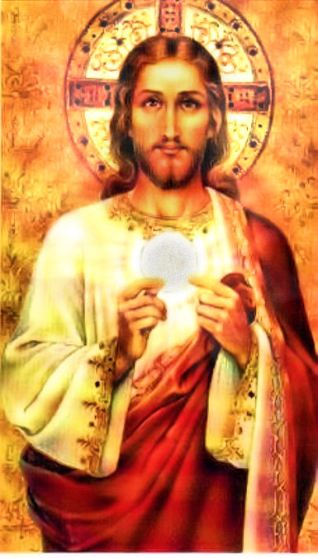

Jesus Eucharist

In the years surrounding and following World War II, an Iron Curtain descended across the continent of Europe, dividing the East from the West. Countries to the West of the Iron Curtain enjoyed more freedom, while countries to the East of the Iron Curtain found themselves under the influence of the Soviet Union and communism.

As the Soviets invaded, they lowered the Iron Curtain,
which served to keep information and the influence of the outside world out
and to keep people who might flee to freedom in the West in.
These countries were referred to as being “behind the Iron Curtain.” The Iron Curtain allowed war crimes to be committed without being observed and controlled by the outside world.

The Iron Curtain got its name from the iron curtain that was common in the theaters of the day. Events behind the theater curtain were not visible to the audience and were cut off from outside observation.

Karol Woityla was a young man who grew up behind the Iron Curtain during this time. In 1978, he was elected Pope and took the name John Paul II. That year, on Holy Thursday, he wrote a letter to priests, in which he tells of a custom that developed in many places behind the Iron Curtain, where persecution left no priests.

The custom is this:

People would go to an abandoned church, or if one no longer existed, to a cemetery where a priest was buried. They would take a stole, the garment worn by a priest when he celebrates the sacraments, when he acts in persona Christi, in the person of Christ, and they would place it on the altar or on the priest’s tombstone, and together they would recite the prayers of the Mass.

At the place where the consecration would occur,
at the words that only the lips of the priest could utter,
a deep silence would ensue,
a deep silence interrupted only by weeping.

My brothers and sisters, this year perhaps more than ever, we can understand their anguish.

What does it mean tonight for the priests to celebrate the Mass of the Lord’s Supper when the People cannot come to the church to receive the Eucharist?

What does it mean for you to tune in online to watch this Mass,
to unite yourself to this Mass,
when you cannot receive communion?

This is what it means:

It means that the Eucharist is real.
It means that the Eucharist matters.
It means that the reality of the Eucharist is bigger than me and it is bigger than you.

It means that the priesthood matters.
It means that the power Christ has given to his priests is real. He has vested them with his authority and power to continue to re-present these sacred mysteries for our salvation and for the salvation of the world until the end of time.

It means that the sacred mysteries that we celebrate,
here,
tonight and throughout the rest of the Triduum,
and indeed, every time we gather at the altar…
it means that these sacred mysteries continue the saving action of Christ in the world whether I am able to receive the Eucharist or not. The suffering, death, and resurrection of Christ made all the difference in the world, even though you and I did not find ourselves standing under the Cross outside of Jerusalem in the year 33 AD.

Brothers and sisters, in these days, on this night in particular,
when you desire with all of your being to be united with the Lord Jesus in his passion by receiving the Eucharist, know that you ARE spiritually very close to him even as he is close to you.

Tonight, you are offering a sacrifice and a service of love for the good of your brothers and sisters. Tonight you wash their feet by your absence.

Tonight, you are united to Christ in your suffering even as he prepares to experience his suffering.

Tonight, we are in good company. We are in communion with each other and with all of those saints who lived behind the Iron Curtain – saints who, in their desire to receive the Eucharist when they were not able to do so, were shining witnesses to the reality of the Eucharist and the power of the Priesthood.

United with them in your desire to be united to the Lord, your souls cry out:
The Eucharist is real and the Eucharist matters!
The Priesthood is real and the Priesthood matters!

They matter because the suffering, death, and resurrection of Jesus matters.
They matter because Jesus instituted them on this night…and he instituted them for you.
They matter because you matter.

You matter to Jesus. You are loved by Jesus. He is about remind you again of this love over these holy days.

It is a love that led him to give his life for us.
And it is a love that leads us give our lives for him and for one another.
From the Transfiguration to the Cross to the Resurrection

Homily for Second Sunday of Lent (Year A)
March 7-8, 2020
Sacred Heart, EGF – Saturday 5:00 PM; Sunday 8:00 am
Holy Trinity, Tabor – Sunday 10:00 AM

Focus:             From the Transfiguration to the Cross to the Resurrection
Function:       Remember what God has done so as to strengthen your hope in what God will do.


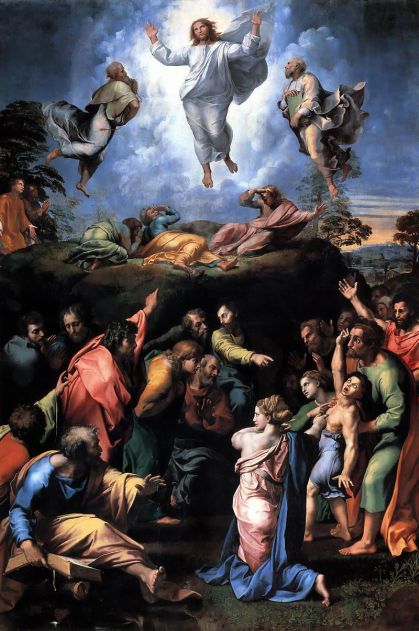
Transfiguration_Raphael

The Transfiguration
Raphael, c. 1520

[This homily was preached in front of the altar with movement.
1 – standing to the left of the altar
2 – standing in front of the altar and under the crucifix
3 – standing to the right of the altar]


1 – From dusk
2 – to darkness
3 – to dawn

1 – From sunset
2 – to night
3 – to sunrise

1 – From health
2 – to suffering/death
3 – to eternal life

1 – From the Transfiguration
2 – to the Cross
3 – to the Resurrection

1 – Two prophets, Moses and Elijah, flank him in his glory.
2 – Two criminals flank him in his humiliation.[i]
3 – Two women, Mary and the other Mary, flank him at the empty tomb.

1 – From the Transfiguration
2 – to the Cross
3 – to the Resurrection

1 – His garments glisten in the light radiating from his face.
2 – His garments torn as darkness covers the land at 3:00 in the afternoon.[ii] 
3 – His garments, the burial cloths, laid aside in the empty tomb.

1 – From the Transfiguration
2 – to the Cross
3 – to the Resurrection

The Transfiguration and the Cross are inexorably linked.[iii]  An ancient holds that the Transfiguration took place 40 days before Good Friday.

We hear the story of the Transfiguration twice each year.

The first time is today:
1 – the Second Sunday of Lent, approximately 40 days before
2 – Good Friday.

The second time is on August 6th:
1 – the Feast of the Transfiguration, which is 40 days before
2 – the Feast of the Exaltation of the Cross.

1 – From glory
2 – to anguish
3 – to glory

1 – From the Transfiguration
2 – to the Cross
3 – to the Resurrection

The book of Sirach, chapter 11:
The day of prosperity makes one forget adversity;
the day of adversity makes one forget prosperity.

Leo the Great:
The great reason for this transfiguration was to remove the scandal of the cross from the hearts of his disciples, and to prevent the humiliation of his voluntary suffering from disturbing the faith of those who had witnessed the surpassing glory that lay concealed.

We, as members of that same body, the Body of Christ, are to look forward to a share in that glory which first blazed out in Christ our Head.[iv] 

We often see this pattern in our own lives.

1 – We glimpse the glory before the suffering,
and the glimpsed glory helps us to
2 – bear our share of hardship for the gospel with the strength that comes from Christ.

1 – Many of us are secure now. Things are going well.
2 – The Cross will come. We might be tempted to despair. When it comes, remember the glory you’ve glimpsed in the present,
3 – and remember that God will lead you through it.

2 – Some of us are in a period of darkness now.  You are standing at the Cross.
1 – Remember what God has done,
3 – so as to strengthen your hope in what God will do.

Lent prepares us to carry our Cross when it comes. It trains us for the sufferings that will come in life. When it comes, look for his glory to be revealed.

The glory of Christ:
in whom we live,
in whom we move,
in whom we suffer,
in whom we rise,
in whom we shine forth like the sun in the Kingdom of our Father.

The Transfiguration is given to us today to remind us of this truth:
The sufferings of the present are as nothing compared with the glory to be revealed in us.
The suffering of the Cross leads to the glory of the Resurrection.

Remember times of prosperity in times of adversity.
Remember times of adversity in times of prosperity.

1 – The Transfiguration leads to
2 – Good Friday, but Good Friday
3 – leads to Easter Sunday.

We now come to the Eucharist.

His glory hidden in the form of bread and wine, now revealed to the hearts of those who believe.

For a moment we bask in his glory.

1 – May the glory of this Eucharist lead us
2 – through the sufferings of this life
3 – and into the glory of an eternal Easter.


[i] Curtis Mitch and Edward Sri, Catholic Commentary on Sacred Scripture: The Gospel of Matthew (Grand Rapids, MI: Baker Academic, 2010), 218.
{Quoting William Davies and Dale Allison, The Gospel according to Saint Matthew (ICC.  Edinburgh: T&T Clark, 1988)}.

[ii] Curtis Mitch and Edward Sri, Catholic Commentary on Sacred Scripture: The Gospel of Matthew (Grand Rapids, MI: Baker Academic, 2010), 218.
{Quoting William Davies and Dale Allison, The Gospel according to Saint Matthew (ICC.  Edinburgh: T&T Clark, 1988)}.

[iii] Joseph Ratzinger (Pope Benedict XVI), Jesus of Nazareth (New York: Doubleday, 2007), 305-318.

[iv] Leo the Great, Sermon 51 in the Office of Readings for Second Sunday of Lent (Liturgy of the Hours).

The Foolishness of God’s Economy

Homily for 7th Sunday in Ordinary Time (Year A)
February 22-23, 2020
Sacred Heart, EGF – Saturday 5 PM; Sunday 8 AM
St. Francis, Fisher – Sunday 10 AM

Focus:       The foolishness of God’s economy
Function:  Dare to give foolishly.


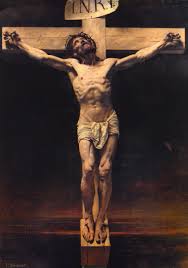
Leon Bonnat - The Crucifixion

The Crucifixion
Leon Bannat

There is a lot of foolishness in the readings tonight.

Offer no resistance to one who is evil.
Turn the other cheek.
If they want your tunic, give your cloak as well.
If they force you to walk a mile, walk for two.
Love your enemies. Pray for those who persecute you.

We are confronted tonight with utter foolishness when we might expect to hear about justice and fairness.

Justice and fairness, giving another his due for his labor, these are the virtues upon which any respectable economy is built.

I do this for you, you do that for me.
Tit for tat.
Debit and credit.

So what are we to make of the foolishness with which we find ourselves confronted tonight?

Only this, I think:

God has a different kind of economy.[i]

Our economy is an economy of transactions.
God’s economy is an economy of freely giving.

Our economy keeps a record of debts.
God’s economy forgives debts.

Our economy is an economy of justice.
God’s economy is an economy of love and charity.

Our economy is an economy of filling up our bank accounts with the treasures of this world.

God’s economy is an economy of self-emptying love, of kenosis,
the self-emptying love of Christ Jesus, who
though he was in the form of God,
did not deem equality with God something to be grasped at.
Rather, he emptied himself, taking the form of a slave,
coming in human likeness, and found human in appearance… (Philippians 2)

Foolishness.

In our economy, a person is expendable and replaceable.
In God’s economy, no one is expendable nor replaceable.

In God’s economy, there is no transgression, no sin, that cannot be forgiven so long as I am willing to ask for that forgiveness.

And perhaps the greatest foolishness of all:
We bring forward ordinary bread and wine, common elements, worth basically nothing.  Through the prayer of a priest, God transforms them into the Body and Blood of Christ, a priceless treasure beyond the measure of any worth, and it is freely given to us.

Foolishness.

In God’s economy, we are to become the fools, fools for Christ and fools for the sake of love.

Listen again to the words of that fool St Paul:

If anyone among you considers himself wise in this age,
let him become a fool, so as to become wise.
For the wisdom of this world is foolishness in the eyes of God.

In the wisdom of the world, it makes no sense to give up on collecting what is owed to me. I hang onto that invoice and demand payment.

In the eyes of God, it makes no sense to hang on to that invoice, because whatever is owed to me by another has already been more than paid by the precious blood of Christ that paid the debt of my sins and opened for me the way to eternal life.

We owed a debt that could not be paid and in justice we deserved Hell. God sent his son to die in our place and paid the debt for us.
That is foolishness! The foolishness of God!

We’ve won the lottery through Christ’s sacrifice for us, and yet we keep track of a couple of measly dollars that someone else owes to us. Some of those dollars are physical and material, but I am talking mostly of those spiritual dollars that we carefully track: the grudges, the hurts, the wrongs done to us whether they be perceived or real. We hold on to those invoices and continue to debit and credit the accounts of others when our accounts which had been maxed out have been wiped clean.
That is foolishness!

We want to receive God’s mercy but we want to deny mercy to others.
That is foolishness!

Brothers and sisters,
We can only show mercy to others when we allow ourselves to accept the mercy that God freely offers. Some say, “I don’t deserve it.” They’re right. If we deserved it, it would be justice.  Because we don’t deserve it, it’s called mercy.

The challenge of the foolishness that surrounds us tonight is simply this:
Let us not ground our relationships in debts and demands, in rights and duties, but in the generosity of love. If we do that, the Kingdom of God will break into our midst.

We must burn all of the spiritual invoices that we hold against our brothers and sisters, we must empty ourselves of the grudges, the hurts, the resentments that we hold
if we are going to be able to accept the mercy and love of God in our own lives.[ii]

Is this foolishness? Absolutely, it is foolishness. Foolishness in the eyes of the world.

But it is love that makes us fools.

Have you ever seen a young couple in love?
Love makes us do foolish things for the sake of the beloved.
I imagine many of you have experienced that yourselves.

It is worth becoming a fool for the sake of love, because a fool in love lives a full life.


[i] One of the most inspiring homilies that I heard during my years of seminary formation at Saint Meinrad was given by Fr. Denis Robinson, OSB, our president-rector, on the occasion when my classmates and I declared our candidacy, which is a step toward priestly ordination where the Church officially recognizes that we are being considered as candidates for the priesthood. I found inspiration for this homily in his, which can be found here:
http://substancehopedfor.blogspot.com/2015/11/candidacy-homily.html

[ii] Fr. Jacques Philippe, The Eight Doors of the Kingdom: Meditations on the Beatitudes (New York: Scepter Publishers Inc, 2018), 161-164.


You are the Light of the World

Homily for 5th Sunday in Ordinary Time (Year A)
February 8/9, 2020
Sacred Heart, EGF – Saturday 5:00 PM; Sunday 8:00 AM

Focus:             You are the light of the world.
Function:         Let your light shine.


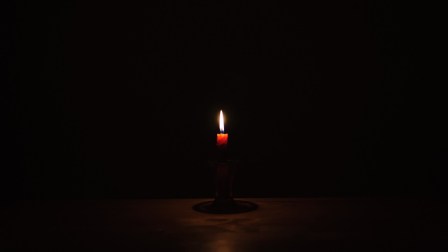
candles_table_black_dark-24664

Your light must shine before others, that they may see your good deeds and glorify your heavenly Father.

 Two extremes in Christianity, neither is the gospel.

  1. Doing good deeds SO THAT they may be seen.
    • “Look at me; look at me; look at me”
    • “Look how holy I am”
    • Impure motivation: the goal is to be seen
    • The focus is not Christ; the focus is me.
  1. Not doing good deeds so that I may remain hidden
    • Doing so in the name of humility – the opposite vice of #1. A false humility
    • “playing small”
    • Mediocrity

The Christian way: Let your light shine, so that they may see your good deeds.

Let it shine.

Christ is the light of the world.
He dwells in your soul because of your baptism.
He wants to shine within you.
He wants to break out of you and to bring light to those in darkness.

Brothers and sisters,
There’s a lot of responsibility that goes with being the light of the world.[i]
Too often we are afraid to shine.
Too often we afraid to stand out, to draw attention to ourselves.
“Let your light shine” not “force your light to shine to draw attention to yourself”

“Let it“ is passive.
Allow it, don’t force it.

Let your light shine, that they may see your good deeds and glorify your heavenly Father.

Become who you were made to be. A Saint!

Be a person who spends time with Jesus,
be a person who prays,
and then let God do with you what he will.

Don’t stand in his way. Don’t stifle the spirit. Don’t play small.
Your playing small doesn’t glorify God.

How do we play small?

When we focus on “not being darkness” instead of on “letting our light shine”.

Sometimes we sin more by “what we have failed to do” than by “what we have done”.[ii]

  • Sins of commission are easier to see.
    • The Ten Commandments.
    • “What I’ve done but shouldn’t have done”
    • The works of darkness
  • Sins of omission – “what I should have done but did not do”.
    • Corporal and spiritual works of mercy
    • The Beatitudes
    • The works of light

We are called to so much more in life than “don’t sin”. We are called to love!
We are called to so much more in life than avoiding darkness. We are called to be light!

How do we let our light shine?

Simply be a person who prays and then do your part in the situations that present themselves to you. Do that, and your light will shine.

Let your light shine.

The Christian is a candle, the flame is Christ. A candle’s purpose is to let the light shine. It doesn’t make it shine, it lets it shine.

Victor Frankl: “what is to give light must endure burning.”

The Paschal Mystery: the candle dies to itself to bring life and light to others.
So must the Christian, the light-bearer. We die to ourselves so that others may live.
Charity – dying to ourselves for the good of the other.

Brothers and sisters, is your light still shining? Is your candle burning? Or has it burnt out?

Light doesn’t fight darkness as in a back-and-forth boxing match. Light dispels darkness where it’s present, and even a small candle in a dark room dispels a lot of darkness.

Do small things, but don’t play it small.
Do small things with great love.

You have the light within you – let it shine!
Ask him what he wants you to do, then do it!
Be not afraid of the darkness, light cannot be overcome by darkness! The light always overcomes the darkness.

Let your light shine before others, so that they may see your good deeds and glorify your heavenly Father.


[i] Fr. Ron Knott, Conference for Priests of the Diocese of Crookston on “The Jonah Complex: The Convenience and Selfishness of Playing Small”, June 11, 2019.

[ii] Fr. Ron Knott, Conference for Priests of the Diocese of Crookston on “The Jonah Complex: The Convenience and Selfishness of Playing Small”, June 11, 2019.

What is it about Christmas?

Homily for Christmas Eve (Year A)
December 24, 2019
Holy Trinity, Tabor – 4:30 PM
Sacred Heart, EGF – 10:00 PM

Readings:        Isaiah 9:1-6     Psalm 96         Titus 2:11-14      Luke 2:1-14

Focus:              God gave his Son for us.
Function:         Receive the gift!


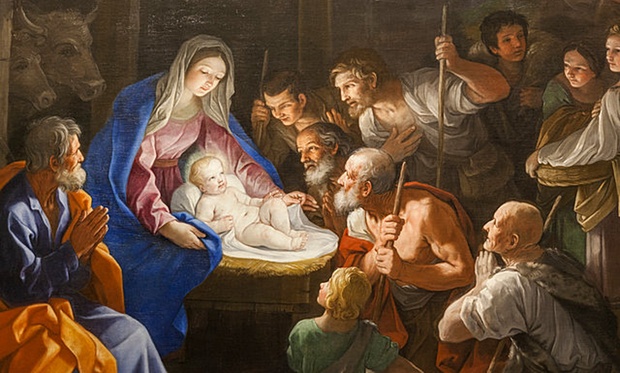
nativity.jpg

What is it about Christmas?
What is there about Christmas night, in particular?

There is a spirit of joy. A spirit of love.  Of brotherhood.  Of family.
There is almost a sense of magic to this night.

It is a night of wonder and awe.
It is a night of forgiveness and tenderness, of warmth and light and grace.

What is it about Christmas?
What is it that captures our hearts?

Is it homes that are warm and lit amid the darkness and chill of winter?
Is it the aroma of Christmas Eve dinner wafting through the house?
Is it the presents wrapped and waiting under the tree while the kids wait in anticipation?

What is it about Christmas?

Perhaps it is the songs we sing.
Perhaps it is the family gathered.

Certainly, that is an important part of it.

And yet, still, there is something more.
There is something spiritual that is not easy to put into words.

What is it about Christmas?

In the beginning, before the creation of the world, there was nothing. Darkness.  Oblivion.

Then God spoke. He spoke his Word.

Let there be light.

And light shone out of the darkness. Creation sprung into being.  We know the story.  Adam and Eve were created and placed in the garden.  They walked in harmony and in friendship with God.  God loved them.  They loved God.

They walked in the light.

Then they were given a choice.

They chose darkness over the light. Sin entered the world, and with sin, death.

Down the ages, as the pages of history were written, mankind stumbled and groped in the darkness. Sin and division.  Unrest.  War.

The light within them was snuffed out. Or rather, it was all but snuffed out.  An ember of a promise remained; the promise of what God would do:

I will put enmity between you and the woman, between her offspring and yours. He will strike at your head while you strike at his heel…

The promise of a Messiah. The promise of a Savior.

Brothers and sisters:
What is it about Christmas that captures our hearts? It is this:
Tonight, God has fulfilled his promise!

The people who have walked in darkness have seen a great light;
Upon those who dwelt in the land of gloom, a light has shown.

A star over a stable. Angels appearing to shepherds in the dark of night revealing the glory of God.

For tonight, a child is born to us, a son is given us!

Christ, the Light of the world.
Christ, the son of God and the son of Man.

Tonight the Son of God himself, the Light of the world,
pierces the darkness of our night
and gives us back what we lost through the sin of Adam and Eve;
through our own sin!

He gives us light and love!
He gives us hope and joy!
He gives us redemption – a second chance!

The glory of God enlightens our hearts tonight
even as it filled the night sky of the hill country of Bethlehem all those years ago!

The people who have walked in darkness have seen a great light;
Upon those who dwelt in the land of gloom, a light has shown.

What is it about Christmas?

Tonight we see the light.

Tonight we glimpse the glory of God.
Tonight our hearts see it and sense it.
Tonight our hearts are captured by love:
the love of God for you and for me.

A love that would leave Heaven to be born on earth.

A love that would be born as a tiny child,
vulnerable and helpless,
so that we who are vulnerable and helpless to atone for our sins
might be reborn as children of light.

A love that would be born in order to die
so that we would not die in our sins
but would have the forgiveness of our sins
and be reborn to eternal life!

We celebrate tonight much more than the birth of a great man.
We celebrate tonight much more than the mystery of what it is to be a child.
We are celebrating that much more has happened here: 

The Word became flesh.
God has become one of us.

God is not remote, at a distance.
God is very close to us.

He seeks tonight to touch our hearts, to enter our hearts! [1]

Brothers and sisters,
let us allow the joy of this night to penetrate our souls!
Let the King of Glory in! Today is born our savior, Christ the Lord!

What is it about Christmas?
God gave his Son for us.

While they were there, the time came for her to have her child, and she gave birth to her first-born son. She wrapped him in swaddling clothes and laid him in a manger, because there was no room for them in the inn.

The light has come into the world.
Christ our Savior is born.
May we make room for him in our hearts.

May the mystery of this night open our eyes to let in the Light so that we might see!

May the mystery of this night open our hearts to let in the Light so that we might love one another has he has loved us.


[1] Joseph Ratzinger, “The Blessing of Christmas”.

The Darkest Hour is Just Before the Dawn

Homily for Third Sunday of Advent (Year A) – Gaudete Sunday
December 15, 2017
Sacred Heart, EGF – 10:00 AM

Focus:             The darkest hour is just before the dawn.
Function:         Rejoice in hope.


darkest_before_dawn

A young man, weighted down by the guilt of his sin,
feels worthless, powerless, and hopeless.
He’s tried to rise and overcome his sins by his own power for so long.
He continues to fall and to fail.
He is losing hope.

The darkness is great.

It’s Easter night. He’s visiting with his family.  A Christian movie plays in the background, one of those movies that always plays on Easter night.  The acting is cheesy.  He pretends not to watch.

One line stands out to him: “All you have to do is turn to Christ…”

He thinks, “Yeah, if only it were that easy…”
A voice in his heart speaks: “Why can’t it be that easy?”

The light begins to pierce the darkness.

He begins to pray for the grace and courage to make a good confession.

Two weeks later, he enters the confessional. “Bless me, Father, for I have sinned.  It’s been four years since my last confession.  These are my sins…”

The priest listens while the young man speaks. The young man finishes, quite embarrassed at what he’s done.  He braces himself for what the priest will say…

The priest smiles, slaps his knee, and says, “Welcome back! Don’t wait so long next time!”

Absolution is granted. He feels the chains fall.  He’s free.  His heart is set ablaze.  Life is breathed into his soul which had been dead in sin.  He leaps for joy.  God is real.  His spirit rejoices in God his Savior.

An elderly woman sits alone at her kitchen table, wrapped in a blanket. She can’t sleep.  It’s been six months since her husband died.  Cancer.  Her heart is heavy.  It’s been heavy for a long time.

The pain of watching him suffer…
The helplessness of not being able to do anything to take away the pain.

She’s scared. She doesn’t know what to do.  He was her heart.  He did everything…paid the bills, fixed things around the house, plowed the driveway.

The driveway…

She sighs as she looks out the window. It’s early.  The light from the moon glistens off the freshly fallen snow.  The driveway is filled in.  She needs groceries but it looks like she won’t be going to the store today…

She was helpless to do anything for him in his sickness and now she feels helpless to do anything for herself.

The darkness is great.

She prays, “O God, how can I go on?”

Then, a noise. The rumbling of a motor.
Snow bursts forth from the ground into the air.

Her neighbor,
a young man with his own family to care for,
with his own driveway to plow out,
with his own job to get to,
walks down her driveway pushing his snowblower as the first streaks of dawn break on the horizon…a glimmer of hope on a cold winter day.

Brothers and sisters, today we celebrate Gaudete Sunday – “rejoice Sunday”.

In the darkest and coldest part of the year,
when the days are nearing their shortest,
the Church bids us to rejoice.

We rejoice because the Lord is near.
Ten days until Christmas.
Ten days until the Lord comes with power to save his people.

John the Baptist languishes in the darkness of his prison cell and though he cannot see the works of Christ, he hears about them:

The blind see. The deaf hear.  The lame leap.  The dead rise.  The poor have the good news preached to them.

Though we languish in the darkness of our hearts, we rejoice because of what Christ is doing…

A young man who has been blinded and paralyzed by his sin finally begins to see and is set free in the Sacrament of Reconciliation…

He had been deaf to the cries of those around him, cries like the widow next door, but now he hears. Now he hears, even in the early morning hours, and he moves, he rises, and sets to work setting her free.

And the good news is preached to her. God is near.  God loves her.  He has not forgotten about her.  He comes to her in the form of a young man whose heart has been set free, free to love with the love of Christ.

Brothers and sisters,
when you are tired,
when the outlook is bleak and you are tempted to give up,
when all hope seems lost and when the darkness is too great…
when you feel like you can’t take another step…

Wait. Wait just a little longer.
Watch. Watch with your eyes peeled for the coming of the Lord.
Remember. Remember that Jesus comes in the darkness of night.

It was in the fourth watch of the night,
between the hours of three and six AM,
when the disciples were losing hope in the storm.
It was then that Jesus came to them walking on the water.
In the darkest hour of the night, the Light of the world appeared out of nowhere, climbed into their boat, and calmed the sea.

Jesus comes in the darkness of night.

When it is the darkest,
it is then that
The dawn from on high shall break upon us
to shine on those who dwell in darkness and the shadow of death,
and to guide our feet into the way of peace.[i] 

It is today, on Gaudete Sunday,
when the white light of Christmas
pierces the dark violet of Advent,
transforming it into the shade of rose,
the color of a flower which brings the promise of summer,
a reminder that it is in the darkness of night
when the first streaks of dawn appear and the Morning Star rises in our hearts.[ii]

It was in the dark of night when a star, a single star,
could be seen in the distance,
shining over a simple stable in the hill country of an obscure town called Bethlehem…

It was in the dark of night when Christ was born.

Gaudete.

Rejoice, for even now, Joseph and Mary are making their way to Bethlehem for the census.

It may be dark, but the darkest hour is just before the dawn.


[i] Canticle of Zechariah.  Luke 1:78-79.

[ii] 2 Peter 1:19 (see Exultet, sung at the Easter Vigil)

Everything Changes When the Lord Looks Upon You

Homily for 33rd Sunday in Ordinary Time (Year C)
November 3, 2019
Sacred Heart, EGF – 10:00 AM

Focus:              Everything changes when the Lord looks upon you.
Function:         Let him look upon you.


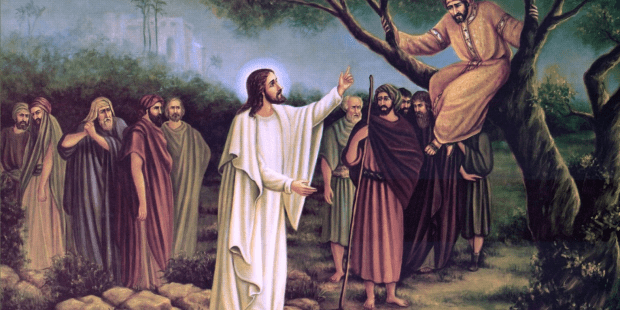
zacchaeus.png

No one wanted to see Zacchaeus.

There wasn’t much to see. Nothing special about him.  He was small in stature.  There was nothing worth noticing.  He was a nobody.  An outcast.  No one liked him.  He was the most unpopular man in town.  It was his job to take their money.

No one wanted Zacchaeus to go to their house, and they certainly weren’t going to his.

No one wanted to see Zacchaeus.

And then everything changed.

Everything changed when Jesus came passing through.

Zacchaeus climbs a tree to look upon the Lord. He climbs the tree to see Jesus, but he ends up being the one who is seen, who is noticed.

The Lord looked upon him.

And everything changed.

Jesus takes notice and this nobody becomes a somebody.

“Zacchaeus, hurry down, for today I must stay at your house.”

Everything changed. Everything changed because Zacchaeus had been penetrated and captured by a gaze that recognized him and loved him for what he was.[i]

Zacchaeus was lost and is now found. He is saved.  Zacchaeus thought that he was the one who was seeking Jesus, but in reality it was Jesus who had come to seek and to save him.

Those of you who are married, think of the first time you noticed your spouse. The first time you looked upon them.  The first time they looked upon you.

Everything changed.

Everything changed when they returned your gaze.
Everything changed when they looked upon you.
Everything changed when you looked upon them looking upon you.

Brothers and sisters, the Lord is looking upon you like he looked upon Zacchaeus. Are you willing to look back?

Zacchaeus climbed a tree to see Jesus. He was willing to put himself out there, to risk ridicule in order to see the Lord.

Are you willing to do the same?

Are you willing to climb the tree? To make the effort?  To risk being noticed?

It’s a scary thing to allow the Lord to look upon us. We have so many fears.

Fear of being uncomfortable.
Fear of my sin.
Fear that I might have to change.
Fear that I won’t know what to say or how to respond.

It makes me uncomfortable to let the Lord look upon me.
It’s safer, it’s easier, not to look.

But the Lord wants you to look.

Let him look upon you.

Look upon him looking at you.

St. John Vianney once walked into his country church and found a man sitting before the tabernacle. He asked him, “What are you doing?”  The man replied: “I look at Jesus and he looks at me.”

Before the Lord the whole universe is as a grain from a balance or a drop of morning dew come down upon the earth.

And yet, the Lord notices.

He noticed Zacchaeus.
He notices you.

He looks upon you, with love.

Today, Andrew and Kayla bring Jasper here, to this place, to the waters of baptism.  They bring him here to allow the Lord to look upon him.  And Jesus says, “Jasper, today I must come to stay at your house.”  Today, salvation comes to this house.

Today, you come to this Eucharist. You stand in the pew, in the crowd.  You dare to come forward.  Jesus sees you.  “Today, I must stay at your house.”

That means you have to change.

Zacchaeus had to change.
Jesus’ look made him change.
Everything changes when the Lord looks upon us

Today salvation has come to this house.

Indeed.

Lord, I am not worthy that you should enter under my roof, but only say the word and I shall be healed.


[i] Servant of God Luigi Giussani, founder of Communion and Liberation (from the November 2019 Magnificat Reflection)

Who’s Writing Yours?

Homily for 26th Sunday in Ordinary Time (Year C)
September 29, 2019
Sacred Heart, EGF – Sat 5:00 PM; Sun 5:00 PM.

Focus:             The choices in this life will impact us for all eternity
Function:        Choose to help those in need.


Dives and Lazarus
The rich man and Lazarus

If this Gospel reminds us of anything, it is this:
Heaven is not a guarantee.

What we choose today will affect us tomorrow.
The choices in this life will impact us for all eternity.

Lying at the entrance to the garden of Eden, we cried out to God for mercy. In the fullness of time, Christ came to our aid and won for us our salvation.  We did nothing to earn it.  But we can do, (or rather, fail to do) something that will cause us to lose it.

We were once Lazarus, but Christ the rich man came to our aid and has given us the treasures of Heaven. Lazarus has been redeemed and now stands as the rich man in us.  It is now our turn to help the Lazarus who lies languishing at our door.

Our lot has been radically reversed, and we are called to radically reverse the lot of others in need.

Can we do it?

Will we do it?

Who is the Lazarus lying at your door?

What do you find yourself withholding from him?

Monetary help?
Praise?
Affirmation?
Love?

In the parable, the rich man was of no help to Lazarus,
Yet he expects Lazarus to be of help to him.

If we take our Christian obligations lightly and fail to help those in need, we will have only ourselves to blame when we find ourselves facing the harsh judgment of God.

If we fail to show God’s mercy in this life, we will face God’s judgment in the next.

On that day, we may find that our sins of omission (what we have failed to do) may be worse than our sins of commission – (what we did).

Lazarus will be there, standing by the just judge.

Will he accuse you?
Or advocate for you?

For I was hungry and you gave me food.
I was thirsty and you gave me drink.
I was a stranger and you welcomed me.
I was naked and you clothed me.
I was in prison and you came to me. 

Lord, when did we see you?

Whatever you did for Lazarus, you did for me.
Whatever you did not do for Lazarus, you did not do for me.

Heaven is not a guarantee.

A letter of recommendation from a poor person would be of great help.

Who’s writing yours?

True Charity is a Fire that will Divide

Homily for 20th Sunday in Ordinary Time (Year C)
August 17-18, 2019
Sacred Heart, EGF – Sat 5:30 PM; Sun 8:00 AM, 5:30 PM
St. Francis, Fisher – Sun 10:00 AM

Focus:              True charity is a fire that will divide.
Function:         Be a fork in the road


fork in road.jpg

Father, make of me a crisis man.
Bring those I contact to decision.
Let me not be a milepost on a single road; make me a fork
that men must turn one way or another
on facing Christ in me.[i] 

This prayer by the evangelist and martyr Jim Elliot,
an evangelical Christian missionary to Ecuador,
hung outside of my classmate Mark’s door
when we were in the seminary.

Mark was a crisis man,
a man of conviction,
a man set on fire with the love of God.

The fire of divine love that raged in his heart was a dividing fire,
a fire that called me out on a few occasions
and made me realize
where I was compromising in my own discipleship:

The fire of his silence after I had spoken an uncharitable word about another classmate…

The fire of seeing him reading his Bible at the end of his early morning holy hour before the Blessed Sacrament, when I was late for mine…

The fire of his courage to stand up for what was right even if it was unpopular to do so…

Father, make of me a crisis man.
Bring those I contact to decision.
Let me not be a milepost on a single road; make me a fork
that men must turn one way or another
on facing Christ in me.

Our God is a consuming fire,
a devouring fire.

I have come to set the earth on fire, and how I wish it were already blazing!

The message of the Gospel is meant to rid us of every burden and sin that clings to us.
It is a burning fire,
a purifying fire,
a fire that clears away the dead so that new life can spring up.

The Church’s message is Jesus’ message, and that message is meant to challenge us.
A “get along attitude” is not the attitude of the Gospel.

Charity, divine charity, is the message of the Gospel.

And true Charity is a fire that will divide.

Division is not the intention of charity, but true charity will cause division at times. And that is OK.  In fact, it is necessary.

Pope Benedict XVI:
If the Church simply aims to avoid conflict,
merely to ensure that no disturbances arise anywhere,
then her real message can no longer make any impact.
For this message is in fact there
precisely in order to conflict with our behavior,
to tear man out of his life of lies and to bring clarity and truth.
Truth does not come cheap.  It makes demands, and it also burns.

True charity is not a bland indifferentism that accepts everything a person says.

True charity is a love that convicts the heart,
a love,
a passion,
that wills the good of the other.

True charity is a love, a choice,
to be for someone.

True charity is the passionate opposition
to that which works evil in the life of the beloved.

That evil must be burned away. It must be burned away by the Word of Truth which must be spoken.

If you want to see how charity divides, pick any issue that has to do with the dignity of the human person and speak the truth of the Church’s teaching to that issue. Have a conversation and speak the truth
in charity,
in love,
out of care for the true good of the other person,
to the issue of:

  • Abortion
  • Contraception
  • Euthanasia
  • The death penalty
  • Immigration
  • What marriage is and what marriage is not
  • Living together outside of the sacrament of marriage
  • Gender issues

To speak a word of love is to speak a fiery word.

It is to speak not my word,
but the word of God
in this or that situation,
and to allow that word to clear out all that is opposed to it.

To be on fire with the love of God is to be a man or woman of conviction,
a man or woman who is convicted by the love of Jesus for me and for you,
a conviction that causes me to stand up for what is right and to face with courage what is wrong,
to stand up and to face it because of my love for God and because of God’s love for you.

True charity calls us to be men and women of integrity, truth, and goodness,
men and women on fire with the love of God for souls,
disciples of the Lord Jesus Christ who came to cast a fire on the earth!

Jesus came to cast a fire upon the earth,
and he says that this fire will cause division.

True Charity is a fire that will divide.

To be for one thing is necessarily to be against another.[ii]
To turn toward one thing, it is necessary to turn away from something else.

To face the East is to have your back to the West.
To turn to the Good is to turn away from Evil.

We now come to this Eucharist, and we turn toward Christ.

We turn the One who came to cast a fire on the earth.
We come to our God who is a consuming fire.

In consuming him, we are to allow him to consume us.

In the words of Blessed Pier Giorgio Frassati:
Feed on this Bread of the Angels
from which you will draw the strength to fight inner struggles,
the struggles against passions and against all adversities,
because Jesus Christ has promised
to those who feed themselves with the most Holy Eucharist,
eternal life and the necessary graces to obtain it. 

And when you become totally consumed by this Eucharistic Fire,
then you will be able to thank with greater awareness the Lord God
who has called you to be part of his flock
and you will enjoy that peace
which those who are happy according to the world have never tasted.
Because true happiness…does not consist in the pleasures of the world and in earthly things, but in peace of conscience which we can have only if we are pure in heart and in mind.[iii]

My classmate Mark allowed Christ to consume him,
and Mark’s life became a fork in the road that compelled me to turn more toward Christ.

So too for you.

If you come forward to consume him and allow him to consume you,
his divine fire will rage within you
he will make of your life
a fork
that men must turn one way or another
on facing Christ in you.


[i] Prayer by Jim Elliot.

[ii] Bishop Robert Barron, Homily for August 18, 2019.

[iii] Deeter, Rev. Timothy E and Christine M Wohar, eds., Pier Giorgio Frassati: Letters to His Friends and Family (Staten Island, NY: Fathers and Brothers of the Society of St. Paul, 2008), 129.

Faith Pushes Us Forward on Our Pilgrimage

Homily for 19th Sunday in Ordinary Time (Year C)
August 6-7, 2016
St. Philip’s Bemidji – 5:30 PM; 7:30 AM; 9:00 AM

August 11, 2019
Sacred Heart, EGF – 8:00 AM; 10:00 AM

Focus:              Faith pushes us forward on our pilgrimage.
Function:        Take the next step.


IMG_0543

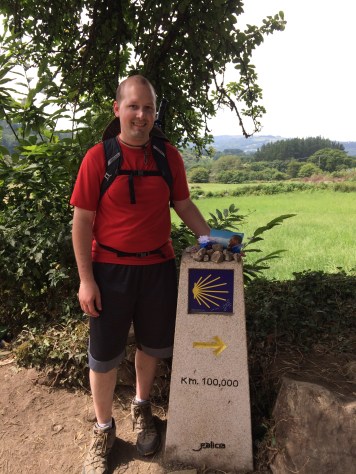
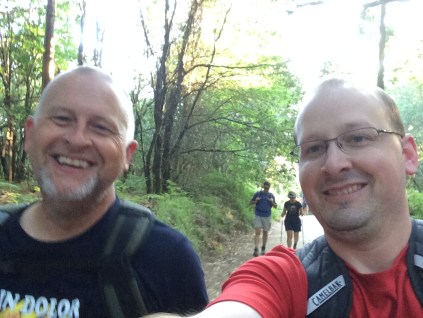
It is good to be with you again. As you may know, three weeks ago I left for a pilgrimage to Spain to walk “el Camino de Santiago,” or “The Way of Saint James.”

The tradition holds that, after the ascension of Christ and the outpouring of the Holy Spirit upon the apostles, St. James evangelized Spain. In the 9th century, a shepherd discovered the tomb containing his bones and, in time, a Church was built over the site.  It became a popular pilgrimage site, and there are paths beginning in France that lead across Northern Spain, ending at the Cathedral in Santiago.  This became known as the Camino, which is Spanish for “the Way” of Saint James.  Many, many pilgrims walk the Camino each year as a pilgrimage.  Some start in France and spend 4-5 weeks walking the 775 kms to reach the Cathedral.  Our group started in Sarria, Spain, and walked the last 115 kms in 6 days.

When we arrived in Sarria, we had a rest day before we started walking. I remember walking through town.  It was an unsettling experience.  I didn’t understand the language very well.  The surroundings were unfamiliar.  I wasn’t entirely sure where I was on the map.  The Cathedral seemed so far away.  I was making this pilgrimage with a group, and only for 6 days.  I began to think of people who made this pilgrimage by themselves.  It seemed like such a daunting undertaking.  If I’m honest, I have to admit that some fear set in – fear that would have discouraged me from starting out on the journey had I been alone – fear that would have taken some faith and courage to overcome.

Faith is the realization of what is hoped for and the evidence of things unseen. Faith led Abraham, our father in faith, to leave his home and all that was familiar and to set out for a far-away land that the Lord had promised to give him. He had the strength and courage to leave because he had faith in the God who had made the promise.  Even though he could not see where he was going, he had a real faith that he would arrive in the land that was promised to him.

IMG_0432

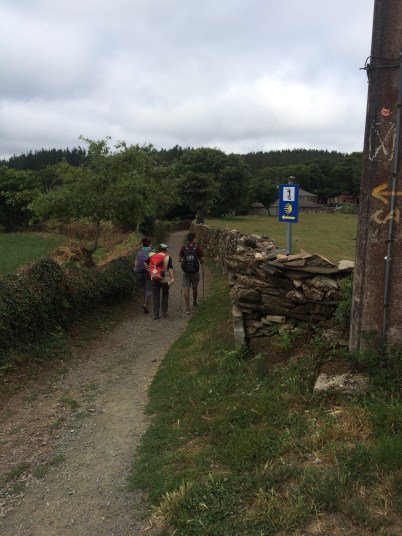
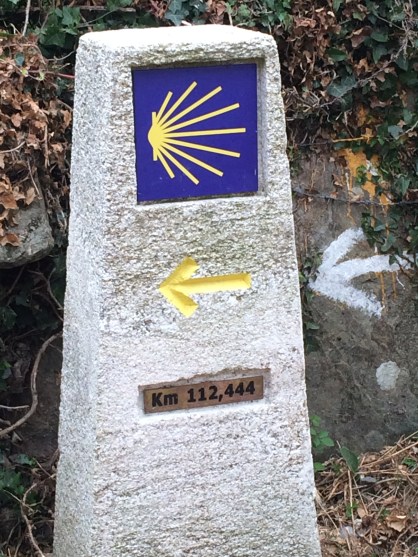
The next day, when we started out on our pilgrimage, we came across the first of many granite markers we would see. These markers had a yellow arrow that pointed to the path and indicated how far we were from the Cathedral.  As we walked, we kept our eyes open for the next marker.  They were everywhere. They were the evidence of our destination, the Cathedral, which we could not see.  By following the path that the markers laid out for us, we had faith that we would realize – that we would come to see – the Cathedral that we hoped that we would see.  The markers with their yellow arrows gave us faith and hope that we were going in the right direction. Faith is the realization of what is hoped for and the evidence of things unseen.

A pilgrimage is not always easy. Sometimes things don’t go as we had planned. Sometimes there are blisters – painful, nasty blisters.  We walked 14 miles the first day.  At the end of that day, my friend Deacon Jerry had 4 blisters on the bottom of his feet.  He rested his feet that afternoon, applied some moleskin to them, and set out with us the next day.  We walked another 14 miles, and Jerry had a couple of more blisters at the end of that day.  He rested again and applied some more moleskin.  Day 3 was a shorter walk – only 8 miles.  By the end of that day, Jerry was in agony.  He could hardly walk.

When we got to the hotel, someone in our group asked the clerk if there was anyone who would be able to look at his blisters and treat them properly. The clerk contacted a massage therapist who often visited pilgrims on the way.  Ludi arrived at the hotel in minutes, took one look at his feet, and said he needed to have a doctor look at them.  She then drove us to the hospital in her own car and then waited with us for over an hour while they treated his blisters.  She then drove us back to the hotel, and adamantly refused to take any money for her time.  “No, no, no, you are my friends.”

Pope Francis has said that “Faith is not a light that scatters all our darkness, but a lamp that guides our steps in the night and suffices for the journey.” In other words, faith does not light up the whole path so that we can see the destination, but it is just bright enough to help us see the next step we should take.  Faith does not remove the darkness of suffering, but it accompanies us in the darkness.  The light of Faith shines brightly when the darkness is great.  In the hour of trial, faith brings light.  The name Ludi means “light”, “one who is full of light.”  Ludi was, indeed, a great light for us on the Way.

IMG_0769

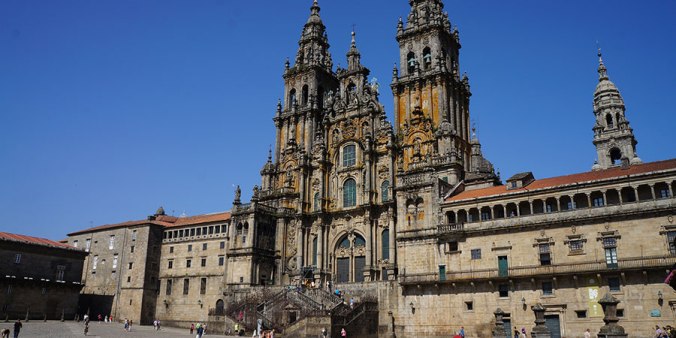
Deacon Jerry had to skip 2 days of the pilgrimage, but was able to rejoin us for the final day. After 6 days and 76 miles of following the yellow arrows on the granite markers, we finally reached the Cathedral in Santiago.  They yellow arrows had pushed us forward on our pilgrimage, and by following them, one by one, one after another, we reached our destination.

Brothers and sisters, life is a pilgrimage. We are journeying toward a destination – the heavenly Jerusalem – the Kingdom of Heaven where Christ, the premier pilgrim, has gone before to mark the way for us.  He blazed the trail and has left markers along the path so that we can follow where He has gone.

IMG_0402

He has left us yellow arrows in the Commandments that show us how to live – where to walk – so that we do not stray from the path that leads to eternal life. Wide is the road that leads to destruction and narrow the way that leads to the Kingdom of God, but the command of the Lord is clear, giving light to the eye, so that we can see the path we should follow.

He has left us the Eucharist – the Mass – as the Memorial of his Sacrifice to nourish and strengthen us on our journey and to keep us on the path to eternal life – the Memorial which we do in remembrance of Him who made us the great promise: “I am going to prepare a place for you…” Our faith in what God will do is strengthened when we remember what God has done.

IMG_0997

He has given us friends and family – fellow pilgrims along the way – some of whom are ahead of us – who know the way because they can see the next marker on the horizon when we do not yet know where we are going.

Life is a journey. Life is a pilgrimage.  There are hills and valleys.  There are blisters on our feet.  There are fellow pilgrims along the Way.  There are markers pointing out the way we should go even though we may not yet see the destination.

Faith is the realization of what is hoped for and the evidence of things unseen. Faith pushes us forward on our pilgrimage.

Have faith, take the next step, and look for the next marker.

And when the journey is over, we will have a great story to tell.

cathedral - santiago

Cathedral of Saint James (“Santiago”)

IMG_0844

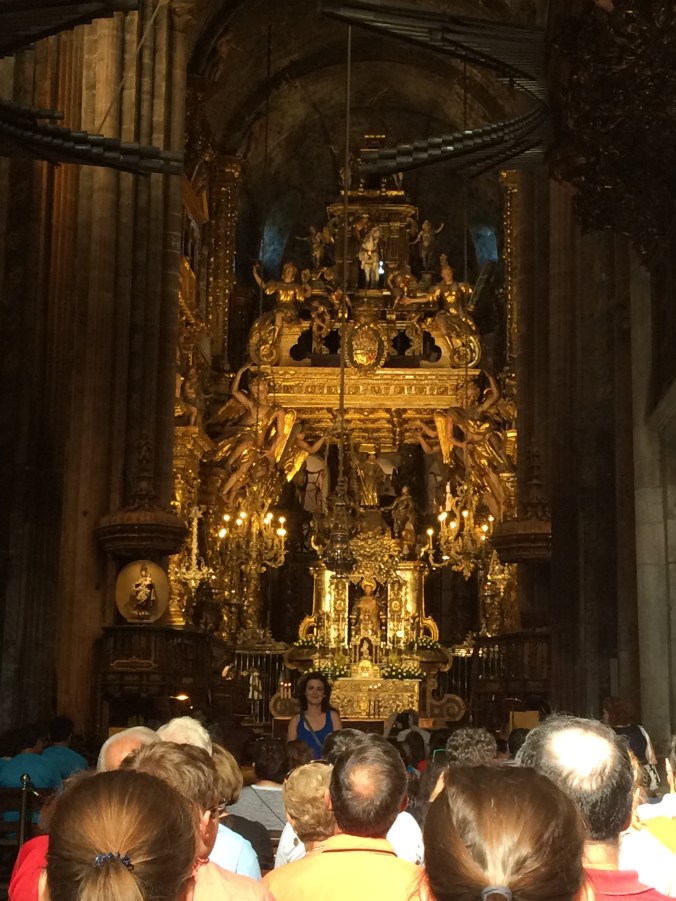
The main altar inside the Cathedral

IMG_0849

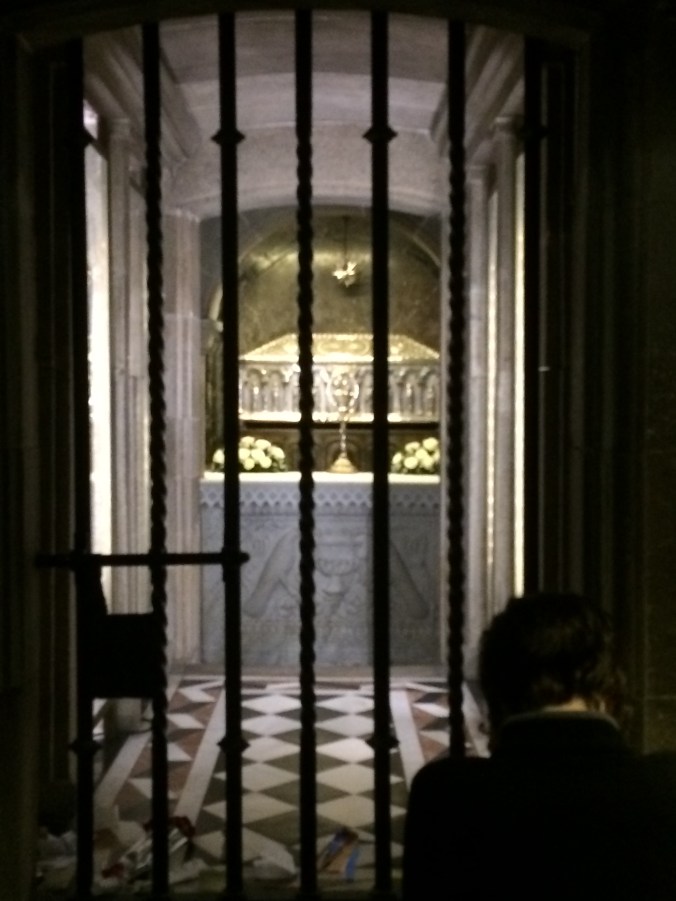
The tomb of Saint James in the crypt of the Cathedral